When a new year begins, it’s always a great opportunity to look back at standout projects and campaigns that rise above the others. Here are three engaging and creative programs from 2023 that we’re particularly proud to highlight.
IN HER DEFENCE

Everyone knew bad things were happening on the Naslund farm. Then, in the fall of 2017, Miles Naslund’s body was found welded into a box at the bottom of a pond near his family’s property in Alberta, Canada. His wife and son were charged with first-degree murder.
The Globe and Mail’s In Her Defence brings you Helen Naslund’s story in her own words for the first time. Through a series of jailhouse interviews with reporter Jana G. Pruden, Helen speaks about the domestic violence she suffered, and what led to that fateful night on the farm. Meanwhile, Helen’s friends come to terms with the abuse they suspected had been going on for decades, and the reality that Helen could spend the rest of her life in prison.
Tens of thousands of Canadians joined the outcry over Helen’s harsh sentence, asking what is fair punishment when a victim becomes the accused. Now they’ll hear firsthand about Helen’s life, her long fight for freedom, and the way the justice and legal systems deal with women who kill their abusers.
The podcast is best enjoyed in your favourite podcast app. Search “In Her Defence” or find the show in Apple Podcasts, Spotify, and more.
SECRET CANADA

Secret Canada is a multi-faceted investigation of Canada’s many freedom of information (FOI) systems from The Globe and Mail. This project serves three purposes: It’s a repository for data on hundreds of thousands of FOI request summaries filed across the country, a detailed guide on how to file requests, navigate the system and appeal decisions, and a source of freedom of information news. The data was painstakingly collected through hundreds of individual FOI requests to every major public institution at the federal, provincial, territorial and municipal level. Our investigative journalism on this topic can be read on The Globe and Mail’s website.
Freedom of information is the bedrock of a functioning democracy. Canada, once an international leader on access issues, is now a laggard. The country’s access woes are a problem for journalists, researchers, academics, activists and citizens, all of whom use FOI laws to learn about how their governments and public institutions function. Instead of simply complaining about the system, in the fall of 2021, two reporters from The Globe and Mail’s investigative team decided to take on Canada’s broken freedom of information system. This website is the result of that work.
Stay updated on FOI news, upcoming data releases and improvements to the project by signing up for The Globe’s Secret Canada newsletter.
A SONG COMES TO LIFE
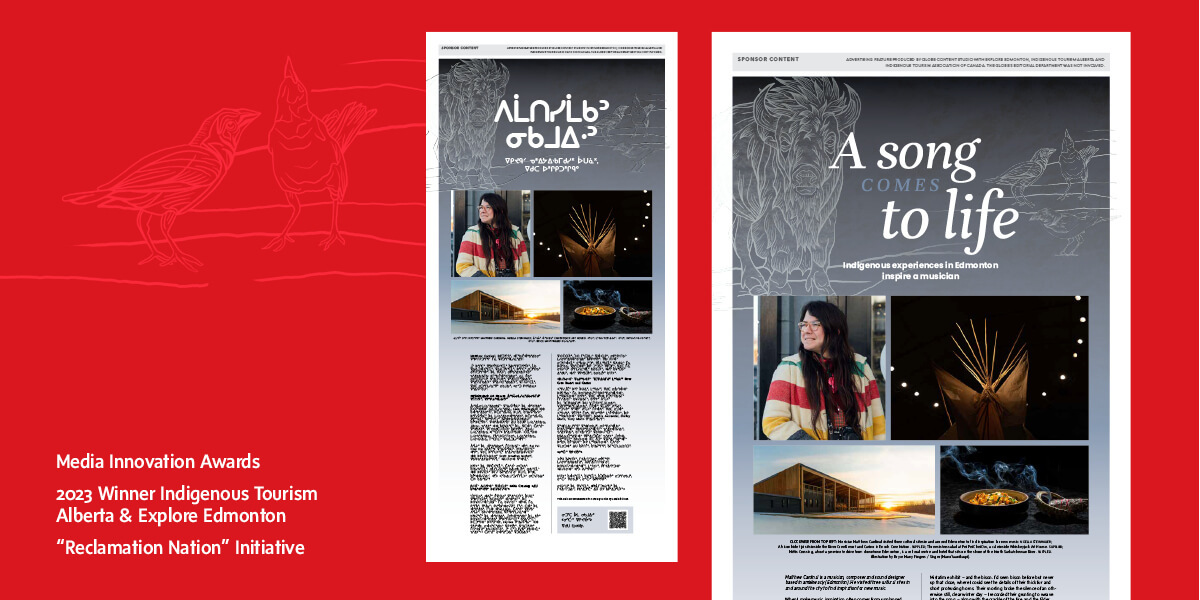
Globe Content Studio, in collaboration with Explore Edmonton and Indigenous Tourism Alberta, presents “A Song Comes to Life,” a unique advertising feature where Cree musician Matthew Cardinal, inspired by three Indigenous destinations around Edmonton, created a song titled “three visits.” The digital article captures Cardinal’s experiences, marking the first-ever publication in Cree Syllabics by The Globe and Mail. Supported by the Indigenous Tourism Association of Canada, the project spotlights Whiskeyjack Art House, Métis Crossing, and River Cree Resort and Casino. Cardinal’s vision is to connect listeners with the communities and places that inspired the song, which is also available on most major music platforms.
The success of this campaign was attributed to the power of collaboration and the celebration of Indigenous talent. This project is intended to resonate with Canadians and draw mainstream attention to Indigenous culture and tourism in the Edmonton area.